BRITISH BLUES ARCHIVEPEOPLE THAT WERE THERE |  |
|
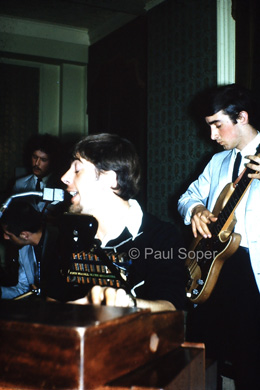
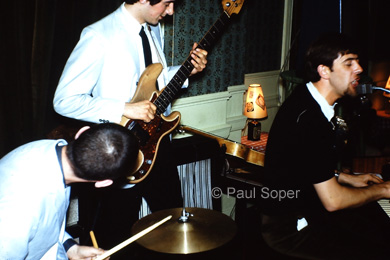
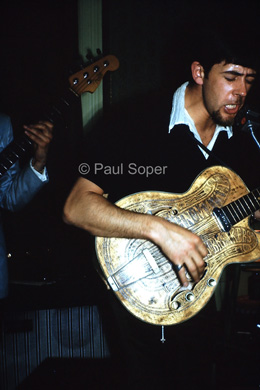
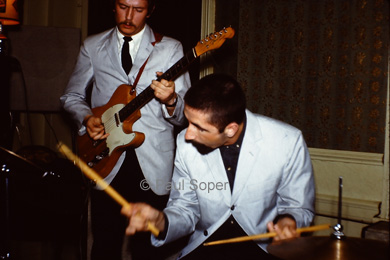
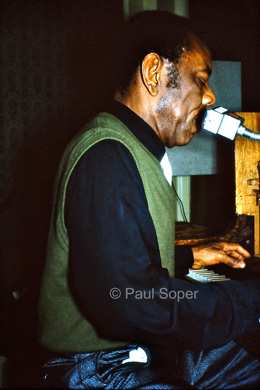
Paul Soper in action Biography:
R&B memories? Part 1 - the Rolling Stones When Pete asked me to write something about my memories of the Blues scene in London in the early 1960's I blanched a bit. I memorise copious volumes of tax law and legal cases in my daytime job but anything else? Gets squeezed out I suppose. Then I thought, well... Keith Richards has 'remembered' enough for a fantastic 'auto'biography - it is ghost written but it is a fantastic read - and perhaps if I cast my mind back I'll remember more. So here goes... Memories of the blues, "never felt more like singing the blues", the word was always there but the music form? I remember sitting on a bus reading 'Melody Maker' in December 1962, an interview with Jet Harris, who had recently left the Shadows, who said that "rhythm and blues" was going to be the next big thing. Hmmm, as a 14-year old schoolboy who had acquired a guitar some months previously (a Martin Colletti cheapo from Bells in Surbiton, strings like cheese cutters with bleeding finger tips to prove it, I have a photograph but no more) what could this 'rhythm and blues' be? I was to discover a couple of months later. Living in Pimlico in central London I was already handily placed for musical adventures and had already gone to see Dave Brubeck and Ray Charles in concert in Victoria with school friends, very different concerts but concerts nevertheless. Returning from a school visit to Stonehenge in May 63, shortly after my 15th birthday my friend Malcolm suggested we go to see a new band called 'The Rolling Stones'. This was not to be a concert venue but a jazz club with a slightly unusual but very handy feature, a Sunday afternoon session.. Ken Colyer, trad jazz luminary and purveyor of skiffle had a club in Great Newport Street, near Leicester Square underground called Studio 51. We were beginning to think that Trad jazz was very 'square' and the purist streak in Ken Colyer meant that we thought he was hopeless old, mouldy and dusty. Many years later I realise that without Ken, who had Alexis Korner play guitar in his band, and people like Chris Barber who brought Muddy to the UK, again hopelessly square to our juvenile eyes, the British R&B boom would never have happened. Studio 51 was the title Ken used, it seemed, for less authentic sessions than the purist New Orleans jazz that he was known for and two of these sessions featured the Stones. They had a Monday night residency, ending a bit late for school, but they also featured, every week, in an afternoon session, every Sunday from 4pm to 6.30pm before going to the Richmond Athletic Club for a later session. This was perfect - Sunday afternoon, 2/6d admission (12.5p) and 6d (2.5p) for a coke at the interval - what could be better! Even now it seems that we went to these sessions every Sunday for many months but I know that it was only from late May/early June to the end of August 1963 but what a change, what a roller-coaster ride took place in those few months. Impressions of the first couple of Sunday afternoon sessions I'll record, but not with any sequence because they don't occur in any sequence. Charlie and Stew (Ian Stewart) were usually the first to arrive, Charlie carrying in and setting up his drum kit centre stage and Stew bringing in and setting up the amplifiers and the Selmer PA. Then Brian and Bill and usually last, Mick and Keith. I remember one afternoon Mick and Keith arriving with girlfriends in tow. Mick brought Chrissie Shrimpton, Jean's younger sister, who had the most amazing blonde hair, how we lusted after her. Keith was accompanied by Chloe Sylvester, an amazingly vibrant black girl. Chrissie we knew of because Malcolm and I liked to take an interest in fashion and fashion magazines in which she had featured, Chloe's name we didn't know but discovered later. But - and remember this was only four years after the Notting Hill raceriots - a black girl-friend - wow! The Stones were still really a six-piece at this stage, although publicly a five piece, as Stew played piano whenever he could and was, in that setting at least, an essential part of the Stones' sound. We didn't know that a couple of weeks before, Andrew Loog Oldham, then the Stones manager, had 'relegated' him to be a roadie. There was certainly a contrast though between Stew and the rest of the band. As I understand it Stew was still paid as a member of the band but his burly rocker persona did not fit in with Andrew's vision of the band. Charlie was the perfect 'mod' - button down shirts, knitted tie etc whereas Stew was an archetypal rocker - seemingly greasy leathers, black jeans etc and this reflected one of the curious aspects that we noticed of the Stones' audience. Mods and Rockers mixed which didn't happen in other settings - a year later there would be blood spilt in Brighton and many other seaside resorts but Mods in 1963 looked down upon Rockers as, well a bit scruffy, Mods (short for modernists, people who liked modern jazz originally) were clean, stylish and cool, well they were at this time or rather we thought we were because we all had Mod pretensions. The excesses of Mod-dom were still a way off and anyway by that time we had become 'individualists' looking down on Mods and Rockers both. The other Stones hovered in the middle - Bill was certainly closer to rocker mode, but then Bill was also visibly older than the other members of the band. Mick, Keith and Brian all wore long hair which wasn't a particular Mod style, too scruffy by far, and in Brian's case almost as long and as blonde as Chrissie's, but they clearly bought their shirts from John Michael, a shirt manufacturer on the Kings Road, Chelsea, hopelessly expensive for us, but very stylish with small tab collars. Trousers were very low-rise (much like today's low cut jeans) but tight fitting, probably purchased from John Stephen or Vince from Carnaby Street, perhaps. Clothes were a very important part of this whole thing at the time, this was music that you identified with but also clothes, literature, fashion, shoes, it all ran together. We were certainly Mods but the Stones stood in a very hip middle. But when they started to play! The Studio 51, Ken Colyer's Jazz Club, was much like the Cavern in Liverpool must have been, a basement club with access via metal stairs from the street and then a long low pair of cellars stretching back from the street door underneath the building above, cellar space to the right was for performance, to the left services. The building above was extensively rebuilt many years ago and where the 'area', the space between the street and the building was, where the stairs went down, is now built over and flush to the building behind. There is no physical remnant of the place but there is a plaque on the wall. At the far end was the stage area, quite a low stage, maybe 2 to 3 foot high, and not a high ceiling of course which helped project the sound forward. The PA amplifier was invisible to us but we were conscious of the Selmer PA column speakers which were set up each side of the stage. Brian and Keith seemed to use Vox AC30's but I heard a suggestion from another muso of the day that they had had the Vox innards replaced with Fender because they were sponsored by Vox but preferred the more authentic Fender sound. I have never seen this confirmed anywhere else and as I remember it very few people used Fender amplification at that time, certainly when the tremelo on the amp was engaged it sounded like a Vox tremolo and not a Fender reverb. With the drums centre and Bill's homemade looking rig to the left of the stage looking from the audience, Brian's amplifier on the left of Mick, centre stage, and Keith to the right the sound was propelled into the audience space, it didn't need to radiate out and this must have helped the band seem very tight, which they were. Stew's (the club's) piano was against the back wall behind the drums with the front covers removed, so he played with his back to the band and the audience. The first time Malcolm and I went there were, perhaps, 50 to 60 other people watching and dancing, but week by week, the audience would grow and grow until by late August people were locked out and getting to the stage was (almost) an impossibility. As I remember it there was a bar area to the left, where cokes were served, and closer to the door, again on the left, the dressing room. The toilets were on the other side of the stairs under the pavement. A typical set list consisted of covers of course, a good sprinkling of Chuck Berry songs of course, Stew firmly on piano on these essentially boogie numbers; Jimmy Reed numbers featuring Mick's thin high harmonica styling and of course Bo Diddley with Mick brandishing 4 large maraccas, Mona in particular, Stew sitting these out, I'm not sure he was a great fan. Coasters-type numbers featured as well, Poison Ivy of course, Love Potion No 9 too, and of course Howlin' Wolf and Muddy Waters numbers - I wish I could sit down now and capture a typical set list - but then all too soon came the break, and then again too soon the end. This was followed by a rapid breakdown of the gear ready to move on to Richmond. What they did not play was 'Come On', the Chuck Berry song which was their first single release. Not once. Later in the year they did play the second single "I Wanna Be Your Man", written by Lennon and McCartney, and we all looked and looked and tried to work out how Brian played what we would later learn was a bottle-neck - more prosaically a length of copper tubing of course. How the raw edges would hurt if you were too eager and forgot to sand down the cut edges! When the summer holidays arrived we started to go to some of the Monday evening sessions as well and first encountered a rather wild-looking Mancunian, dressed in a plastic mac and playing a very strange looking guitar. John Mayall, for it was he, played some rather more authentic blues in the interval on a couple of occasions but we would become more familiar with him in the future. John's guitar, made and modified by him had an extension from the upper bout which contained a harmonica holder and microphone combined enabling him to play both without the folksy metal frame preferred by Dylan - rough but certainly impressive! On 'Get Yer Ya-ya's Out', the Stones live album, Phil Cutler, their announcer, refers to the band as the "greatest rock'n'roll band in the world" - and they were. Looking back over 50 years I have heard a lot of bands in club settings and the Stones were and still are one of the best club bands I have ever heard. We didn't just hear the Stones of course, other bands were available, and we were quite taken with a very dandy looking Mod who played harmonica and sang some numbers with a band called Jimmy Powell and the 5 Dimensions - R&B but maybe a bit closer to the Liverpool sound, but this Mod was the real deal, a 'face' with bouffant back-combed hair, stick-thin, and always had a friend with him who was rather more curious looking and smelled of what we would discover some years later was Patchouli - covering of course another smell that we would also become more familiar with some years later. The Mod was known as 'Rod the Mod', who would go on to sing with Long John Baldry and Julie Driscoll in Steampacket, Rod Stewart of course. Steampacket's keyboard player was Brian Auger, a bit older than us but who had gone to our school. A few years later still I booked the Jeff Beck Group for a college dance and Rod was vocalist then, together with Ron Wood who was then playing bass. Jimmy Powell and the 5 Dimensions recorded in 1965 but what they produced then was not a patch on the band with Rod and no recordings of the band with Rod were made as I understand it. A digression - Ron Wood's older brother, called Arthur, had a band called the Artwoods, and was known as being a guitarist who could control feedback, certainly an influence on Pete Townsend, I'm sure, but they would be popular on the circuit in the following year, 1964. Guitarists used clean settings in the main, touch of tremolo on the Bo Diddley numbers, distortion was not in favour and solo's tried to acheive the sort of sharp short bends employed by Hubert Sumlin behind Wolf rather than the more expressive style that would be employed to devastating effect in the next couple of years by Eric Clapton. Harmony guitars were played by Brian and Keith at this time, then Brian moved on to a Gretch and Keith a Les Paul, although I could be mistaken on that. Brian was very clearly the boss at this time, he was the man with the roll of bank notes in his back-pocket as we saw when queueing one Sunday afternoon. Keith was the easiest to talk to, I remember seeing him one afternoon on the Charing Cross Road, probably November '63, and asking him if there was any chance of the Stones returning back to Studio '51. They did play another gig there but I couldn't go, and by the New Year they were playing clubs and ball-rooms with a 15 shilling admission - more than I earned per week in my Saturday job. Another band we saw on a couple of occasions at Studio 51 were the Downliners Sect - they seemed to include a few more Coasters numbers in their set, and their big feature was 'Little Egypt', a big Coasters hit. The problem with the Downliners was lack of a PA, or lack of a big-enough PA, you could hear the instruments but not the vocals, we were not impressed, to say the least. The summer holidays also meant that Chris Jagger, Mick's younger brother, could come to some of the sessions, and being the same age we became friendly, although only at the gigs I must stress. Chris got us into the dressing room on a couple of occasions where we could swap pleasantries with the band, well actually I think we probably just sat and kept quiet, but Mick and Keith were only 19 to our 15, seemed like a yawning gap at the time, but not that much I suppose. One afternoon, it may have been before a Stone's session, we encountered a rather weird middle-aged black guy sat at the side with pomaded hair and a hair net on who we were told was Chuck Berry, Berry had been recently released from American prison. Most reference books refer to Chuck touring the UK in 1964, but I am sure this was Studio 1 in 1963. Could be memory tricks of course. Rod and his friend (there is nothing in this other than an observation that they were hanging out together) were also there, smelling strongly as they did, and according to the website Brumbeat.com (Jimmy Powell was a brummie it seems) Rod left the 5 Dimensions, taking some of the band to back Chuck on a UK tour. Again a bit of a mystery, when I saw Chuck he was backed by the Nashville Teens, a Mickey Most band. The Stones' last session at Studio 51 at the end of August 1963 was frantic, completely packed, screaming girls seemed to pack out the front and sweat was dripping off the walls. Only 12 weeks before we'd listened in comfort with 50 people but this was different. However we had decided that as we "knew" the band, well had a passing acquaintance anyway, we should turn this to our advantage. I had borrowed my sister's camera and wanted to take some pictures (don't get excited they have long, long gone. They were very poor quality as the light was so dim and got lost in the school darkroom]. We pushed our way through to the left of the stage, from the audience's perspective, where Stew stood whilst not playing. "Stew" we called, "help us up" and Stew, being a diamond geezer did exactly that, pulled us from the audience up onto the stage. We watched the Stones' final club set that summer from the stage, standing, in my case, right next to Bill and able to take the photos from the side. Next came their tour. I saw the first performance at the New Victoria Cinema, where I had previously seen Dave Brubeck and Ray Charles, but this was a 'pop' tour. Each act had a very short set and was then rotated out to be followed by the next. The Stones came on very early, can't remember what they played, and the first half was closed by Bo Diddley, this was awesome because Bo had rehearsed musicians, Jerome, and his sister, the Duchess, definitely an act, this was the stuff of legend, 'Road Runner' sounded better than when the Stones' played it! Half-time arrives and out for a breath of fresh Victoria air where we encountered Guy Stevens, DJ from the Scene Club, later to become the Clash's producer of course, who was trying to encourage us not to go back in for the second half of the show - everyone we might want to see had already appeared. Remember everything merged together in Mod sensibility and the headline act clearly didn't fit Guy's sensibility. I'm glad I did go in to see the second set because the Everly Brothers were superb. Don and Phil were real American showmen of course but their voices were breathtaking. So was the band they played with, even their matching Gibson guitars, heaven, even if at the time a 'guilty pleasure'! But... this left us with a dilemma - who do we go see now the Stones had got too big? This would take us on through the Yardbirds (well it looked like Keith gave/sold his Harmony to a young E Clapton) and then on to the rather remarkable John Mayall and a whole new chapter of Blues. to be recounted in part 2 of this reminiscence - if I get round to it! In the meantime our musical education was developing as well. It wasn't enough to know that a song was by Jimmy Reed, you had to track down the original. This was much more difficult than it seems, how do you lay your hands on these mythical pieces of gold? Slowly, EP by EP usually - albums were quite expensive - Pye Records had realised the interest in R&B and had the rights, it seems, to Chess records, and started to produce EPs of Chuck and Bo, Howling Wolf - I still have my EP with Smokestack Lightning, Howlin' for my Baby, Going Down Slow and You'll be Mine on my study wall with a cover picture of a Rocking Chair and a guitar - apparently a Dart, looking something like my Martin Colletti! Other labels followed suit as it became apparent that this was the next big thing and a better supply of R&B appeared. And of course you followed on the trail from artist to artist, clue to clue, we didn't have the initiative to write to Chess records as Mick and Keith did, and certainly couldn't afford to import albums, as they did. We didn't have the money for proper instruments either, maybe if I'd been a couple of years older I might have got swept up in this as a friend of mine did. I only met him years later but Alex Dmochowski was two years older than me but did get carried along, found himself in a band, with a bass, recording for Joe Meek and then starting to play in Aynsley Dunbar's Retaliation, going on to play with John Mayall, Peter Green and Frank Zappa! I went on to college, got a business qualification, a girlfriend who was more interested in folk music, and who I'm still married to 46 years later; my school band, TCP (which stood for Tony, Carlos and Paul, was a folk blues trio based on the great Sonny Boy Williamson record on Storyville with Matt 'Guitar' Murphy, we eventually stopped playing together as went left school and went to college, and then my playing was confined to the home until I discovered jamming and the bass, but that is also another story! Before their later tours when I saw the Stones in stadium settings, Steel Wheels in 1991 and then Voodoo Lounge in 1994, I did see them at the Richmond Jazz and Blues Festival in August 1964. By then they were an established 'pop' act and played on the Friday night - they were good, but this was a festival in the days before outside PAs began to be developed, the sound was quite thin, the bass got lost and by this time we had bigger stars to see - Mose Allison, Jimmy Witherspoon and more besides. By August 1964 British R&B had firmly arrived and on the last night of the Richmond Jazz and Blues festival the headline trad-jazz act on the main stage must have noticed that most of the crowd drifted away and went into the tent where the Yardbirds were jamming with Ginger Johnson's African Drummers, Graham Bond, Ginger Baker and Georgie Fame!
Part 2 - Mayall and Klooks Kleek In part 1 I described my memories of encountering R&B for the first time in 1963 through the agency of the Rolling Stones and Ken Colyer's Jazz Club, also known as Studio 51. What happened next? By mid 1964 I was 16 and about to be uprooted from Pimlico and its close proximity to the West End to leafy Hampstead, where another popular club was located. But the West End was still only a bus-ride or a tube journey away... Following the end of the Rolling Stones' residency at Studio 51 my friends were looking round for new blues exeriences and I was now involved in my first blues band, of sorts. A natural successor to the Stones were the Yardbirds, similar material, and in Keith Relf a singer who was clearly fragile but had that relevance we looked for and was a pretty good harp player as well. They looked a lot more Mod than the Stones and had a pretty good guitar player in one Eric Clapton. But, there was also something 'popish' about them, they didn't satisfy as the Stones did. Jimmy Powell and the 5 Dimensions, a rocking band but, when Rod Stewart left them they lost something too. The Downliners Sect - lack of a PA and they tended, like the Pretty Things towards the scruffy end of the blues, we were Mods for heaven's sake- we needed something cooler. Georgie Fame and the Blue Flames had a residency at the Flamingo in Wardour Street to rival the Stones, and a residency that lasted much longer as well but... The Flamingo was very much a late night venue and even at 16 all-nighters were not really on for regular weekly sessions. Georgie's band were also very different to the 'Chicagoish' sound of the Stones, this was a band with a Hammond organ, a brass section, a band that deliberately didn't have a guitar player or so it seemed, they were slick, rehearsed and... somehow just a bit too rehearsed. Over the course of the next few years Georgie would become a firm favourite and I was lucky enough in 1967/68 (?) to see what was supposed to be the final Blue Flames gig in the theatre in the basement of the Mayfair Hotel. Scheduled to run from 10 to 12pm it was still going loud and strong when the hotel pulled the plugs at 2am. By this time Georgie did employ a guitarist, a certain Mr John McLaughlin, and that was a session that will live with me forever. John had in fact played with Georgie until mid 1963, a lineup I never saw, but then rejoined later. I suspect that Georgie's supposed aversion to guitarists at this time was financial - and the band already had the very remarkable Speedy on congas. Neemoi 'Speedy' Acquaye, as trusty Google tells me, was a focal point of the Blue Flames and gave the band a completely exotic sound and look. One evening at Klooks Kleek I was lucky enough to see Georgie and Speedy sit in and jam with the Graham Bond Organisation, Graham played organ but alto sax as well, so that fitted well and the jam, a single improvisation, lasted almost 30 blissful minutes. The Flamingo on a Georgie Fame all-nighter was filled with a mixture of Mods and also a great number of black American service personnel from the bases in East Anglia and I suspect they were one of the reasons why the stingy-brimmed pork pie hat became so popular. They were super cool and, of course, brought the latest dances with them as well. One evening my friend Malcolm had heard a rumour that a new blues band were going to play at the Scene Club in Ham Yard, just behind Piccadilly, and on the other side of the road from the famous Windmill theatre. The Scene was THE Mod club in central London as far as we were concerned, with a great DJ, Guy Stevens, who seemed to have access to an amazing collection of imported R&B, most of which could not be obtained or heard anywhere else. They also allowed the bands to play in total darkness - something I would find frightening even now. So we turned up early and realised that this was a band started up by John Mayall who we had seen, some months before, playing guitar and harp in the interval at Stones' sessions at Studio 51. The Blues Breakers, as they were called, had a very young bass player whose mum and dad brought him and his gear to the gig in their station wagon, and of course in those days you could park in Ham Yard - this was John McVie of course- who would end up being a big influence on yours truly, although many years later. John Mayall had by now acquired an organ and so played guitar harmonica and organ, but still needed a guitarist. Subsequent research tells me that John had already recorded his first single, 'Crawlin' Up A Hill 'with guitarist Bernie Watson, but Bernie had left and so he needed a dep for the night. So we were treated to an electric couple of sets from a guitarist we were already familiar with from the folk scene - Davy Graham. This may have been the only night that Davy played with the band, although Google suggests not, he was using a pickup which slotted into the soundhole of his acoustic guitar, but the sound was spot-on. This was a band we could enjoy.
April 1965 John Mayall, John McVie Bass, Eric Clapton at back Davy had recorded an EP in 1962 with Alexis Korner called 3/4 AD and I soon acquired a copy which I still have today (and yes it is worth a few bob now) - he was also a regular feature on early evening BBC TV with other folk singers like Cy Grant, so it was interesting to suddenly realise that this was blues too. To this day I have still not mastered Angi - the Davy Graham composition that most people associate with either Bert Jansch or Paul Simon, who of course stole it from Bert who learned it from Davy. Bert's version also extends out and includes tributes to other stuff that Davy was playing including Bobby Timmon's Moanin' and all of a sudden jazz started to make an appearance in our understanding of R&B. I suppose this probably climaxed with the ultimate Mod record of early 1964, Sack O' Woe by the Cannonball Adderley Quintet. It extended on both sides of the EP release and it was only a few years ago that I discovered it entire on an album called Live At The Lighthouse from which the track was culled. Even now I wonder why the piano solo doesn't fade out and fade in again which it did when we had to turn the EP over! Adderley and the Quintet also featured on an album with Eddie 'Cleanhead' Vinson which included the best version of Bright Lights Big City ever recorded in my humble opinion. Years later I realised that Cleanhead had recorded back in the 1940's and so was another link to the real origins of R&B which we still, foolishly, thought was a 1950's or 1960's phenomenon! The Scene Club was a very dark basement club, when the bands played they played in the dark, very atmospheric, one of the young Faces who hung out here was called Marc Feld, who would go on to greater things with a name change as Marc Bolan and his band T Rex, but then he was a Face - I suppose I should explain for younger readers that the Mods who set the fashion trends, which the rest of us followed, were called Faces, just as the girls were known as 'tickets' although the significance of that was always lost on me. This was before the rioting between Mods and Rockers started later on in 1964, when the early Mods just dropped the description like a proverbial 'hot potato'. Most modern commentaries on Mod-dom use the Who's Quadrophenia as their point of reference but Jimmy, the protagonist of that rock opera was a Mod 2.0 if you like. Of course there were plenty of pills dropped, although I was always a bit squeamish and avoided illegal substances (at this time) - I really didn't fancy being 'blocked' the following day and found little difficulty in staying up anyway. When I get back after a gig at 3am these days I'm glad I can still do it without chemicals. Contacts in the school cadet force liberated Benzedrine from the cadet force supplies (never recalled after the war!) and removed the aerials from 'whippet' tanks on manoeuvres so providing a 16 foot aerial on the back of the scooter, normally topped off with a fox tail or similar.
Just like many venues today, no stage, play on the floor Where those Mods lusted after scooters we lusted after guitars (oh and Chrissie Shrimpton as well, see part 1) intently studying the guitars that our heroes played and window-shopped extensively, plucking up courage to try out a guitar or two. One brave store had an open evening where an impromptu jam session started - we didn't know what a jam session was but it sure was fun! Just a few yards from the Scene Club was great musical instrument store which specialised in Gretsch guitars. A plot was hatched, but never brought to fruition, under which we would obtain purple hearts etc wholesale and then retail them on, we knew a supplier but... and just off Leicester Square we would sometimes be accosted by young girls who would offer us reefer - had we only known then what we know now. John Mayall and his Blues Breakers played a mixture of Chicago tunes by lesser known artists (to us) and originals, but it was definitely not the R&B standards which most bands of the day played. A couple of weeks after seeing John there we saw a performance by a band from Newcastle called the Animals, Eric Burden's voice was truly amazing and suddenly Ray Charles came back into the equation as an R&B source. Lots of bands played " What'd I Say " but the lesser known works also featured in the Animal's repertoire. The Scene club DJ, as mentioned, was one Guy Stevens who just had the most amazing collection of R&B singles and he was also very knowledgeable and quite willing to chat about his enthusiasm so he was a useful source of further research. One of our school friends had been on an American exchange programme and had spent a year in San Diego, Southern California. His parents used to own a barber's shop in Notting Dale (soon to be demolished to construct the Westway and the West Cross Route) just round the corner from Oil Drum Lane, the scene of the Steptoes' scrap yard. The parents had moved to Brighton but didn't want to interrupt Mel's education (!) so he was allowed to live by himself in the flat above the shop. Amongst the records he brought back from the states was ' Money ' by Barrett Strong - on the Motown label - little did we realise then that that was the very first release by Berry Gordy's Tamla Motown label as it would become. Mayall's Blues Breakers settled down into a regular line-up of Mayall playing several guitars and organ powered through a Burns 60 watt transistor amplifier - state of the art. We speculated how many you would need to chain together to blow the national grid. They don't seem to have the nostalgia value that an old Fender, Marshall or Vox amplifier has today, and I must confess they were not the prettiest of amplifiers, being quite large with a very shiny silver cloth covering the speakers. Mayall's guitars were fascinating and as John was incredibly friendly and tolerant of young kids asking questions we learned a lot about them and why he played them. One was a nine-string - double course on the top three strings, why? Because Big Joe Williams had a nine string National guitar - obvious when you know, and of course here was another name to check out. Our researches were now taking us into some very interesting areas of the blues and as our own band's sound was acoustic in the main, we had discovered Gus Cannon's Jug Stompers and other bands from the 20's and 30's through the Swiss Cottage record library which had a lot of obscure jazz classics including early blues.
John with one of the guitars he carved himself Another of John's guitarswas simply cut-down to a very small body and, like all of his guitars, tattooed is about the best way to describe it, although I think it is actually called pokerwork - using a hot stick to burn/guage images into the surface of the wood. He made them of course and clearly enjoyed woodworking. They were certainly quite unique. A third had a novel wooden extension rising from the upper bout of the guitar which contained a microphone and harmonica holder, the one we'd seen him using at Studio 51. He also had a rack for nine harps which held them on his chest so that whilst playing organ he could take out the appropriate key and start playing if the mood took him - visible in one of the pictures on the archive. John McVie had become the regular bass player and it was only many years later than I discovered that after recruiting him Mayall provided him with a very large pile of '45s which he was instructed to learn. Many years later I realised that I remembered John's bass playing more than I remembered Mayall's guitarists and that was when it dawned on me that I should have played bass all those years. Hughie Flint was John's drummer, always played hunched over the drum-kit but really swung, often with brushes. Later on he became part of the hit-making combo McGuiness Flint with Tom McGuiness from Manfred Mann. Then I heard he became a porter at an Oxford College. Then Guitarists... as mentioned above I first heard the band with Davy Graham but the guitarist who followed him into the band and would be there until March 1965 was Roger Dean. Roger was very jazzy and would later go on to become a regular guitarist with the Joe Loss Orchestra, a position he held for many years. But he was playing the same sort of dance band 9th chords that T-Bone Walker played so it fitted John Mayall's music perfectly. In part 3 (yes I feel a part 3 coming on) I'll try to remember some of the many and varied blues artists who came over in 1964 and 1965 but one was Mr Aaron Thibeaux (T-Bone) Walker - what a lesson in guitar-playing that was. Quite a small man but holding the guitar horizontal to the floor, when he wasn't playing it behind his head or with his teeth, I shall never forget the look on his face when he nodded for Roger to take a solo which was so good T-Bone looked quite put out to be upstaged by goatee wearing Roger. I paid careful attention to some of Roger's chords and still use some today. Roger played guitar on John Mayall's first album recorded live in December 1964 at Klook's Kleek , the club which was to become for me in 1964 what Studio 51 had been in 1963. For that night the band was augmented by a sax-player, Nigel Stanger, and the cables were run over the roof of the pub from the adjacent and convenient Decca recording studios. On a couple of numbers I tried to keep clapping longer than anyone else and I swear I can hear me! A number of live recordings of bands were made this way including one by Cream a while later. The album came out in April 1965 and I was quite disappointed, when I brought my album to be autographed, to discover that Roger had been sacked and replaced by an upstart - a certain Eric Clapton! I did get Eric's autograph that night - but I also took some photographs, some of which are in the Blues Archive. Why didn't I take more? Cost of film was one reason, getting into Klook's Kleek in West Hampstead was 6/- (30p), a lot more expensive than Studio 51, but probably cost of flash-bulbs was another restraining factor. And which other bands would have allowed me the access to take pictures with the same freedom as John? Which other venues would have been as perfect too - no stage at Klook's Kleek, the band played on the floor so if you were at the front you were directly face-to-face with the band. My elder brother had left the air-force in early 1964 and moved into a flat in Hampstead and I would go and stay with him. I discovered that Klook's Kleek was a short walk away in West Hampstead and in the holidays I stayed with Dave and went to the Kleek. Later in 1964 my mother died and I went to live with him in Hampstead permanently. Studio 51 was now out of reach for regular visits but Klooks was a short walk away. The club had been started by (as we called him) 'Dirty' Dick Jordan, as we called him, and originally specialised in jazz but as R&B became more popular Dick started to book the jazzier bands, Graham Bond and Georgie Fame but in September 1963, he dedicated the Tuesday night session to R&B and started to book other bands. It was the upstairs function room of this very large pub in West End Lane, the Railway Hotel, with bars both on the ground floor and in the basement. There was also a bar upstairs and at the interval the band would go with the punters to get a drink, all very democratic. There was also a dressing room at the back of the main room and we would convene to examine the latest beauty in its case, with the band's permission, of course. Admission was controlled by the bouncers who were mainly friendly ex-boxers and you were well advised to become friends with them so that they would squeeze you in if, technically, capacity had been reached.
Eric playing his red tele but it looks to me like he stripped the paint off, Hughie Flint on drums Eric joining the Blues Breakers meant a fundamental change - Roger had supported John's singing and playing and took tasteful solos. Eric was louder, much louder and, from very early on, clearly a highlight, if not still the highlight of the show. Yes he was good, of course he was, and we'd watch his playing as avidly as Roger's but... I can't think of too much I ever learned watching Eric, maybe boosting the bass as you drop to the V on the turnaround, using a trill on the third string on My Baby - but it was Roger whose chord work I still remember. Initially Eric played a Telecaster, probably the same one he played in the Yardbirds but as I remember it was stripped to the wood and in the photos I took it is definitely wood-coloured not red. Later on a Les Paul made an appearance and with his Marshall combo made a truly glorious sound but... for me the focus of the band had shifted and maybe that would explain, partly, why I drifted on in late 1965 to other musical forms. One abiding memory is that Klook's often had a support band who would play a half-hour set in the interval before the headline act came back again. Usually they were not very good, and we usually ignored them in favour of a pint of Watney's Red Barrel - this was of course blatant underage drinking on my part but I'd guess that most of the audience was probably under-age too - and in our defence Red Barrel was a very weak beer - 2 degrees or so. Anyway this one evening, research in the archives of the Melody Maker tells me it was September 26th, the support band came from Birmingham. We all went to the bar, as usual, they started playing a number clearly called 'Go Now' and the whole audience and as well as John and Eric rushed back in to see this band called The Moody Blues and their lead singer Denny Laine. They were very good. Such a pity they became so insipid (and popular) a few years later. Came the summer of '65 and Eric announced that he was going to go round the world with a group of mates, they had bought a hearse, off they went... John had to get in a replacement and would try people out. I didn't hear Peter Green play with the band, I did hear John Weider who later went on to play with Family.
And the special guest that night - Champion Jack Dupree Eric only got as far as Greece, totalled the vehicle and then was back. I heard this variant of the band once only, and this was at a club called Zeta's in Putney. An upstairs room just beside Putney Railway station. By this time both Eric and John McVie were playing through Marshall stacks and Mayall had just recorded 'I'm Your Witchdoctor' and 'Telephone Blues' for Immediate, both of which featured in the set. What do I remember? Well both Eric and John were wearing Converse Allstar baseball boots and corduroy jeans. We knew that the only shop in London selling Converse was Lonsdale, then a boxing-cum-sports shop in Beak Street. Oh, and I was searched by the police on my way home catching the last bus up the Finchley Road, "...lot of burglary about Sir, what have you got in that bag?" I told him, my library book and the silver foil I had wrapped my sandwich in (I had gone to Putney straight from work in Sainsbury's, the 'Saturday job', actually Friday evening and all-day Saturday). "Don't be cheeky" he said as I watched the last bus sail up the road. Nothing new in 'sus'. Oh - the Band? Well the acoustics were dreadful, there were very few people in the club, the volume had escalated more than somewhat, Eric featured a bit too much for my liking, it... it... just wasn't as enjoyable as I'd hoped it would be. Still I was about to go to Cornwall on my first lad's holiday, hitch-hiking there and back and staying in St Ives together with my band and a friend or two and then - college beckoned in September and all of a sudden I would go in a very different sort of direction - but that will be in part 3 - or later?
Part 3 - the Americans Many people credit the Rolling Stones with bringing the original blues greats like Howling Wolf to a wider audience. In fact it was really the Beatles and the 'Beat Boom' of the early 60's which brought those same original blues greats to the UK - but indirectly! Let me explain - music, like a lot of other activities, was unionised, both in the UK and in America but the Musicians Union had a lot more power then than it has today. One of its rules was designed to protect UK musicians - an American artist could only appear in the UK if a UK artist was booked in the States. By the early 60's this allowed a small number of American star musicians to appear in the UK. Then came the Beatles, the Hollies, etc, etc and all of a sudden British groups were the flavour of the month in the States and so many UK musicians crossed the Atlantic that it was now possible to bring over many many more American artists to the UK - and amongst them were some of the greatest names in the Blues. Visiting blues artists were also overwhelmed by the enthusiasm for their music they encountered in the UK - here was a musical form which was next to dead in the states but in Britain they were revered - some relocated to our side of the water permanently including Champion Jack Dupree who made his home in Halifax of all places. How much were they paid to make a European tour? I'd guess it wasn't much, because the tours were fairly gruelling rounds of blues clubs and venues up and down the country - promoters probably took advantage of the low earnings they made in the States to make offers that looked generous to them but meant that they could be put on at a reasonable price in a club that held maybe 120 to 200 people. Not so great for them perhaps but it meant we could not only see them, but talk to them, shake their hands, and experience their music not simply in a concert hall but up close and sweaty! The first blues greats I saw were in a concert hall - Chuck Berry and Bo Diddley on tours of cinemas - this was the old model of touring where a variety bill of artists would be assembled, play two or three numbers each and then rotate on - this was interesting but it wasn't - the blues. The attitude of our two heros was markedly different - Bo brought his US band with him, including, of course, the Duchess on rhythm guitar and Jerome on maraccas - maraccas were an essential part of the aural landscape of the blues at this time - although we'd probably, and more accurately, call it R&B. The R&B charts of the time included blues stars but also acts like Chuck and Bo through to pop acts like the Coasters and every British band included these numbers in their acts - you were as likely to hear a version of Going Down Slow, which I think we'd agree was the blues, as the Stones playing Bo Diddley's Mona - always a club favourite with tremolo guitar and, of course, Mick brandishing as many maraccas as he could carry - just like Jerome - blues? No, but very much pop R&B. So Bo Diddley provided a show and played numbers we'd expect to hear as we'd expect to hear them - Roadrunner was sensational. Chuck - different matter. Famously mean he never brought a band, only his guitar and played with a pick-up band, not even rehearsing, because that would cost... who would you choose as a pick-up? The Stones would be logical, they knew his catalogue inside out and could provide him with a backing band that would make his material come alive - no - he played with the Nashville Teens - a rather fake (in our opinion) R&B band assembled by Mickie Most. Of course he played the crowd pleasers, did the duck walk but... I have never felt motivated to see him again. A jazz loving friend at school went to the same venue in Victoria to see visiting jazz acts and I liked going too - these included the Dave Brubeck Quartet - we all sat in reverential silence but Joe Morello's drum solo was mesmerising, Paul Desmond's sax solos a little too intellectual and Eugene Wright was right on the money - an early bass influence without realising it? We also saw Ray Charles, his Orchestra and the Raelettes! Wow - this was more like it - but we were still sat in the stalls and no-one danced - and Ray was also beginning his country music phase. We didn't really think of him as an R&B star because we really only knew his work from the hits and the later albums. I have seen Ray since, many years later, on a double bill at Wembley with Van Morrison - stripped down band and backing singers who couldn't be called the Raelettes for sure. Mind you Ray still rocked and put his co-star into the shade a bit, well more than a bit, although Van decided to make matters much worse by choosing Wembley to verbally attack a certain small Irish jockey who he was convinced was tupping his wife - I suppose once might have been alright, but between every song??? But I digress, back to '64 when the floodgates started to open a bit wider... In 1964 I went to the Fairfield Hall in Croydon to see what was billed as the "American Negro Blues Festival" - a billing that wouldn't survive today. These two were organised by a German Horst Lippman in association with the National Jazz Federation who also organised the Richmond Jazz & Blues Festival. The first one had only visited Manchester in 1962, the second played Croydon in 1963 but I couldn't afford to go, so I was not going to miss the 1964 tour. This still followed the 'lots of acts, two or three numbers each' format, but this was the real deal and the backing band, led by the mountainous Willie Dixon, were on stage throughout the whole show. I'd be lying if I said I could remember it all - but you can now get DVDs of the tours, mainly filmed in Germany, but the line-up was nothing short of an education in the blues... Lightning Hopkins - I'd always like his guitar work, especially his use of slashed open strings as a rhythmic punctuation and this did not disappoint. Here is a link to a blues festival recording of Lightning Hopkins and his slashing punctuation chords - this is how I used to try to play at the time in our acoustic trio, maybe mixed in with a bit of Matt T Murphy http://tinyurl.com/c8aquoj . Sleepy John Estes was... sleepy, well a little too rural for my taste. John Henry Barbee, guitar and Hammie Nixon, harp and jug were great - we were all getting into Gus Cannon records so to see a real jug player was great, Clifton James and Willie Dixon, yes Willie Dixon, were the rhythm section, piano was played by Sunnyland Slim and guitar was provided by the truly wonderful Hubert Sumlin. Several real treats that do stand out - Sugar Pie Desanto who had just achieved chart success with Soulful Dress and, of course, Howling Wolf. OMG - the Wolf was unbelievable - his head could be fairly described as leonine and the voice was just sooooo powerful. Headliner was Sonny Boy Williamson who had also appeared on the 1963 bill. But the standout memory, thinking back, was Willie Dixon performing N-N-N-Nervous Blues. Sonny Boy enjoyed the 1963 tour so much he stayed on touring Europe so by this time he was not new to the British Blues scene - but course he relished appearances like this - very much the showman - not only singing the songs we knew but of course performing those ridiculous tricks with the harmonica - playing with his nose, putting the harp halfway into his mouth - end first and continuing to play - he was a great influence on UK harp players but thank heavens they can't or don't perform those tricks! Here's a clip on Youtube from the '62 tour with Otis Spann piano, Willie Dixon on bass and Matt T Murphy (I think) on guitar - http://tinyurl.com/2nseod Sonny Boy was the first of these artists I saw in a club setting - quite a tall, distinguished man with a two-tone suit, half grey, half black and a Bowler Hat and properly furled umbrella, already quite a city gent, but a very obviously drunken city gent, harp in one hand, whisky half bottle in the other. He could still please a crowd though, and by now we were seeing him in a guest spot at a club - going through, not a couple of numbers but a full 45/50 minute set. Who was the backing band? - couldn't tell you. I did see him, I'm sure, with John Mayall and the Yardbirds but on a couple of other occasions... don't know. Shows how good he was that the memory of the backing band has been completely erased. Now we didn't know then that there had been two Sonny Boy Williamsons and this man was actually called Rice Miller and had simply stolen or assumed the name of the original Sonny Boy who had died in 1948. As a result these days Rice Miller, Sonny Boy, Sonny Boy Williamson II, whatever you want to call him, is a rather neglected figure it seems to me and his influence on the blues played down. But his skills on the harmonica were immense and studied carefully by every harp player I knew. Howling Wolf must also have stayed on after the 1964 tour because I saw him with Hubert Sumlin at Kooks Kleek in West Hampstead. Now seeing Wolf at Fairfield Hall was great - seeing him and Hubert from 10 feet or so away in a packed and sweaty club was something else again. As mentioned above his large head and voice to match looked fearsome - from this distance doubly so, and the voice was able to be heard as a separate source from the voice through the PA. Hubert Sumlin was incredible too - his phrasing and tone was unlike anything we had heard at that time, very long fingers, and so many bends and trills that you wondered if he bothered to tune the guitar but simply bent the strings until he found the note he was looking for. Check this out - http://tinyurl.com/d2wdofu Now these acts had been brought over by Horst Lipmann, some had stayed on and played extra gigs, I'm sure Horst treated them very well, whether British promoters did? Don't know but what were the economics that allowed so many great players to play so many small venues? T-Bone Walker I mentioned in an earlier part of these memories, and being backed by John Mayall, an ideal combination because he needed a more jazzy approach, given his own background in the 1940's blues, and Mayall could provide that. In addition Mayall was familiar with pretty much the whole of T-Bone's catalogue which very few British bands at the time would have been. As the R&B scene enlarged, bands were basing their arrangements on Mayall's version of a song, or the Stones version rather than sourcing back to the originals. One of the joys of the CD revolution was the production of compilations going back to the 40's and before, so by the 1980's UK bands were trawling through this back catalogue but in the 60's it just didn't exist in any coherent form. Many of the visiting stars ended up being backed by some strange pick-up bands, but whereas Chuck did this deliberately to save money and time I'm sure some of the acts we saw were quite uncomfortable with the bands that backed them. T-Bone was a real showman - check out this clip from 1962 on Youtube - http://tinyurl.com/cvzzuqq - he was a small dapper man, oiled hair, expansive grin, diamond in his tooth? Playing a guitar that looked too big by far he often held it horizontally with his guitar strap over one shoulder as John Lee Hooker did as well - I could never do this comfortably but it looked cool and he played well, the clip comes from the series 'The American Folk Blues Festival 1962 - 66' available on DVD, and worth every penny, which recorded many of the acts that took part in the American Negro Blues Festival that I'd seen in '64. Naturally he didn't like being upstaged by Mayall's guitarist at the time, Roger Dean, but Dean's playing, thinking back on it, was probably highly influenced by T-Bone Walker, he certainly didn't play like the rest of young British blues guitarists. The National Jazz Federation were linked with the Folk Blues tours and also the Marquee club, but every year they organised a jazz, and latterly a jazz and blues festival at Richmond Athletic Club - if the weather was good this was a great weekend and of course from the perspective of today when festivals seem to run most weekends and even weekdays too this was a very unusual event. Quite a large stage, frankly inadequate PA - but PAs had not developed the power for outside concerts that they would just a few years later, and a tent/marquee to the left which provided a second stage. This was the line-up for 1964 - £1 for the whole weekend! - but who the f*** were the Grebbles? MOSE ALLISON HOOCHIE COOCHIE MEN (Long John Baldry, Rod Stewart) MANFRED MAN Now it's interesting to observe that Eric Clapton gets double billing - once with the Yardbirds and once on his own but I'm pretty certain that he didn't play solo - he would not join Mayall until early 1965 but was clearly still a considerable force even then. The line-up reflected the Jazz influence on the festival, most of whom were pretty bog-standard trad with the exception of Chris Barber, who was a considerable influence on British blues (but not during this set), Long John Baldry gets a double mention through the separate listing of the Hootchie Cootchie Men but Gary Farr has to wait until the following year to be mentioned with the T-Bones. As I recall the Rolling Stones played a set as though they were in a theatre, a pale imitation of the band I'd started seeing a year earlier, that was the Friday night, but I can't recall who else was on this bill that evening. Given the poor PA system the contrast between seeing them from a few feet away and in this strange setting was extreme. The next time I'd see them live was in Wembley Stadium. But look through the names and we can add three more influential Americans to the list - Mose Allison, who I loved then and still love today, Memphis Slim, suave sophistication in the blues, and Jimmy Witherspoon. Like a lot of young mods I was introduced to Mose via his brilliant album - Mose Allison Sings - now here was a synthesis of blues and jazz which was direct - and he was clearly, from his vocals, a direct influence on both Georgie Fame and indirectly on John Mayall - who both included Parchman Farm in their acts. We knew that Mose was a 'Mod' - by that I mean that he was a modernist in jazz terms and that is where mods trace their look and roots to - button down shirt, knitted tie, neat suit. So to sit in a deckchair relaxing in the sun listening to Mose, you could close your eyes and dream you were in Tippo. There doesn't seem to be anything on Youtube from those days but you can catch up with the older Mose there. I have seen Mose on a number of occasions over the years, these days he visits Britain on a regular basis and can be found at Ronnie's or the Dean Street Pizza Express. The first time I saw him in the 80's he was at Pizza on the Park which was a great venue. I went with a good friend and our wives and we were lucky enough to get a table right at the front. The MC begins to announce Mose and he is standing right next to me - he gets up on stage and my wife, who must have heard the album a squillion times, says "I thought he was black! I was just about to tell him not to stand there because we wouldn't be able to see Mose Allison!" Heard it a lot, obviously never looked at the cover. On a later gig at Dean Street Georgie Fame was sat on the table behind and he couldn't resist singing along, very sotto voce, to 'Your Mind is on Vocation'. Here is Mose from 1975 by which time his piano style was becoming much busier than the late 50's early 60's which was perfectly laconic cool - http://tinyurl.com/bx355q I must confess I can remember watching Memphis Slim but I cannot remember what he played - he was very smooth and this probably reflects the fact that he had moved permanently to Paris in 1962 - this is the description taken from wikipedia which sums up perhaps why he was so unmemorable - "he moved permanently to Paris and his engaging personality and well-honed presentation of playing, singing, and storytelling about the blues secured his position as the most prominent blues artist for nearly three decades." Says it all. But then, late afternoon, on came Jimmy Witherspoon - Spoon's voice was incredible, like velvet and as it got darker (or is this just my imagination making it even more memorable) he sang 'Evenin Blues' - for me the perfect Witherspoon song. Here is an album version on Youtube - http://tinyurl.com/c44jdwd - but that afternoon it was simple piano, bass and drums. He also recorded the better known 'In the Evening' - different song. I spent years, before CDs came in, trying to track down the version of 'Evening' I heard that afternoon. Guitar on this track recorded in 1963 is T-Bone Walker. I saw Champion Jack Dupree play with Mayall at the first gig at Klook's Kleek after Roger Dean was sacked in favour of Eric Clapton. Mayall employed his sidemen and like any employer (this was before the Redundancy Payments Act 1965 and the creation of an element of job security) if he wanted to replace one guitarist with another he did. Supposedly each band member was on a salary of £25 per week and Mayall kept the surplus after meeting the road expenses etc. Whilst Clapton was undoubtedly a competent guitarist who was about to take British blues into a new direction, Champion Jack was a barrel-house blues piano player and singer of the old school. He also fell in love with Britain and decided to relocate here, settling down in Halifax of all places. I'd guess that the only surprise is that more blues singers didn't do so, given the opportunity - lauded in Britain and the Continent, ignored at home. The USA was still very largely segregated as well. Val Kilmer, the jazz journalist talks about the times that she had, often bringing visiting jazz and blues stars to her home and the cultural shock of coming to England where there may have been a element of discrimination, this was only 4 or 5 years after the infamous Notting Hill riots but here there was no overt colour bar and certainly in our cities there was a much greater degree of acceptance than in the US at the time. Jimmy Reed was probably the most laid-back blues artist, any sort of artist, I have ever seen. Again every blues band included a couple of Jimmy Reed numbers in the repertoire, usually 'Shame, Shame, Shame' and 'Honest I Do', sometimes 'Big Boss Man'. Reed had a Phil Spector wall of sound approach to blues boogie with several guitars interweaving parts and Reed's high-pitched harmonica and slurred vocals being very different from most other R&B stars of the day. This didn't transfer as well into live performance and the boogie became a lot simpler. Reed's music was deceptively simple - listen to a track now and dissect the guitar parts, they really aren't as simple as, say, Status Quo - although a number of people think they were. I'm not sure that Jimmy Reed is rated today as an influential singer and musician but... his songs are still a staple at any jam session and if no-one tries to imitate the slurred delivery and high-pitched harp any longer the songs are still great fun to play. If you were a young white singer in the early 60's, a Mick Jagger, a Keith Relf, it was a lot easier to sing Jimmy Reed's songs and your natural voice was even in the right register - there was no way that you would be able to imitate Howling Wolf! Even today the only British singers who can sing like Wolf did are Ian Siegal and Bill Hurley - Bill starts with the advantage of having a leonine head just like Wolf did. But Jimmy Reed songs - we could all sing in that register. Unfortunately there doesn't seem to be any live footage of Jimmy on the interweb. John Lee Hooker toured Britain on a couple of occasions and had hits in the top 20 too! We're probably all familiar with the John Lee who appeared in the Blues Brothers film and went on to have astounding album success later in life but in the early 60's he was still a young man. Suited in dark mohair, he could almost have been a mod but he still had the same idiosyncratic approach to song structure that plagued accompanists throughout the whole of his life - 12 bar, 14 bar, hell it depended on what he felt like in the moment - all you could do was hang on and listen and even then odd things would happen. He was booked to tour with Mayall and they did do some dates together but I suspect Mayall preferred structure in his blues - so on many of the dates, certainly the ones I saw, most memorably at the Flamingo, he preferred playing with Tony McPhee's Groundhogs. Here's a Youtube sample of Boom Boom, with the Groundhogs if I'm not mistaken, and towards the end the bass guitar goes to the IV when John Lee doesn't, but you can't blame him! http://tinyurl.com/3agm4qd Rufus Thomas - oh my - now here was a showman. Rufus had a big UK following from his hits as covered by the Stones - Walking the Dog, and others, Do the Dog and... even the Funky Chicken, but I don't think anyone was prepared for Rufus Thomas. Short, kind of squat, dressed in a lurid short-trousered suit, Rufus not only sang the hits but got the ladies off the dancefloor to come and learn the dances - because this was dance music. Each hit was actually a dance and we all had to learn the moves and Rufus was the man to show us. And if he could get several pretty girls out of the audience to bump and grind with him he was a happy man. Of course he was also a DJ back home and surely must have played a 1,000 dance halls. Was this the blues? Well of course it wasn't but it was amazing fun - here he is with unknown backing band - Jumpback with just a little funky dancing at the end http://tinyurl.com/dyma838 - I'm guessing the producer didn't want to focus on Rufus's dance moves; from the appearance of Cathy McGowan at the end this looks like a clip from Ready Steady Go - in club mode he looked more like the footage at Wattstax some 10 years later which you can chase down on Youtube. The following year's line-up for the Richmond Jazz and Blues Festival, 1965, included The Yardbirds and a band called The Who supported by the Moody Blues, but I couldn't go on the Friday. Saturday and Sunday were unmissable with a line-up that includes RONNIE SCOTT DICK MORRISEY NEW JAZZ ORCHESTRA ALBERT MANGELSDORFF QUINTET MANFRED MANN GEORGIE FAME BRUCE TURNER JUMP BAND GRAHAM BOND ORGANISATION GARY FARR & the T-BONES RONNIE JONES & THE BLUE JAYS CHRIS BARBER OTTILIE PATTERSON KEN COLYER KENNY BALL THE ANIMALS SPENCER DAVIS JIMMY JAMES & THE VAGABONDS STEAM PACKET - THE BRIAN AUGER TRINITY WITH JULIE DRISCOLL, ROD STEWART AND LONG JOHN BALDRY Once again a fair sprinkling of Jazz but less trad - more modern - and American artists? Not there - were they now too expensive, having learned from the success of touring in 1964? - or were the organisers leaning more towards 'pop' music of the British variety? Each of the five sessions had a subtitle in the poster - the Friday night subtitle - 'Ready Steady Richmond', Saturday evening was called 'Modern Beat' and Sunday evening 'Blues and Soul'. One interesting oddity was the illness of Bruce Turner's bass player and so they persuaded Jack Bruce from Graham Bond to dep on double bass which he did very well. We thought Bruce Turner played 'modern jazz' but in fact his band was very heavily influenced by the jump blues bands of the 40's and in particular Louis Jordan - today Bruce Turner's Jump Band would be regarded as blues through and through! Of course I now know that Jack started out playing double bass and had a considerable jazz background anyway so it wasn't so surprising - however the Jack then wore a blue drape jacket and had a shaggy 'beatles' cut down below his eyebrows and looked a lot different to the jazzers he shared a stage with. One memory that stands out is of Albert Mangelsdorf, a German bandleader whose trombone playing was a revelation - I had only heard jazz trombone in trad jazz bands - this was very much modern jazz and needed careful attention - Niiiice as we would learn to say many years later. There is a very interesting website with reminiscences of festivals, including this one - http://www.ukrockfestivals.com/Richmond-65.html - and they observe " The history of the festival shows the organizers were willing to adapt and go with the rapid fire changes that enveloped the British music scene in the 1960s and 70s - they were after all businessmen, and although they no doubt shared a genuine love of jazz music , they were not about to let that love get in the way of profit." Music generally was about to get flowers in it's hair and the purist mod approach to music was going to expand into many other areas, bringing together folk and frankly 'pop' music into the stew of psychedelia. My musical interests certainly diversified at this time, although meeting the girl who was going to become my wife, and still is today, 47 years later may have had something to do with it as well. College studies interfered with regular gig going, I think we saw Tommy Makem and the Clancy Brothers at the Albert Hall - but one last American artist needs to be added to this amazing roster. September 1966, back at West London College, and an old friend and former musical partner, Carlos Ordonez, part of my trio TCP which had by then disbanded, arrived with news that he had wangled his way onto the committee organising dances and social events at Regent Street Polytechnic which he attended, studying architecture. The Committee had booked a new band who were going to appear for a reasonable fee called Cream - Clapton, Bruce and Baker of course. Did I want to go? - if so the tickets were 2/6d and would I put up a poster? Well of course I wanted to go - the money changed hands, the poster went up, the date went in the diary and in early October we made the journey to the Poly's gymnasium, located off Great Portland Street to see the band. Now between the booking having been made, when Cream had first been formed, and the day of the Freshers' Dance the hysteria surrounding Cream had grown and it was all we could do to fight our way in, fortunately the magic tickets did the job, but many people were obviously trying to pay on the door - tough, because it was sold out. The first band up were a John Mayall cover band - they played a lot of the material which Mayall played with a similar sound and approach, even covering John's two early singles, Crawling Up A Hill and The Crocodile Walk. Hmmmm. Was this the first tribute band - you can't call it a covers band when it plays covers of covers - can you? Next came Cream who were, without a doubt, the loudest band I had ever seen this close, extended soloing was the name of the day, and their repertoire at this time was mainly blues standards, Robert Johnson covers like Crossroads of course, I don't think that Pete Brown had started to write the Cream originals with Jack Bruce at this stage. Marshall stacks - 4 of them, 2 each side, and Ginger's enormous drum kit filled the stage produced an enormous sound, although my bass rig today puts out more watts - but as you may know what really counts is the amount of air you move and this set up was 16 x 10" either side of the stage. With a decent PA the sound was good, loud but clear enough not to be fatiguing. It was obvious that Cream were, deservedly, going to be the next big thing. Then, just before midnight when the concert was scheduled to finish, Chas Chandler, bass player with the Animals climbed on stage, very distinctive because he was also very tall and announced that he had brought a young man from America over who was going to sit in with the band - please welcome - Jimi Hendrix. Hendrix was playing a white Strat (in my memory) and launched into a high octane version of Killing Floor. Eric looked bemused, lit a cigarette and walked off the stage leaving Jimi with Jack and Ginger as a trio. I'd like to report that Jimi was greeted with thunderous applause but I can't - my wife, as she now is, was getting increasing agitated because she had promised to be home by 12 and her father would not be a happy man - and her father not being a happy man was a sight to avoid. So, as the number was still carrying on, we left, caught a taxi and didn't incur too much wrath. I have subsequently learned that this was the second time Jimi had sat in with a band in the UK, and the Killing Floor was the only number he did, and it was the last number of the night, so we didn't miss too much. For years afterwards people would claim that this concert never happened, that I must have made it up, but it was only as the more 'scholarly' books on Hendrix appeared - Crosstown Traffic by Charles Shaar Murray for one - that the occasion was described and my memory confirmed. I never saw Jimi at any other gig although my wife does report having waved a washing powder packet she had just bought at him a couple of years later as he was getting into a taxi - Doh! So within a couple of years, starting at age 15, I'd seen the birth of the greatest rock n roll band in the world, the explosion of the British blues boom and some of the greatest names in the American blues scene. Even today with tours, concerts, and festivals it is difficult to imagine the impact that the visitors from America had. Unlike the trad jazz revival where only a very few lucky people got to see their idols in the flesh and so had to rely on recordings alone to try recreate the feeling of a revivalist meeting we had the real thing. The real thing made it clear that a sterile recreation of old crackling 78s was not what the blues and R&B was about. These people were, first and foremost, entertainers, they wanted us to dance, to jump about, to enjoy what they were doing. To see the humour, and the pathos as well, and that could be why there has been no trad-jazz revival. Some people today would like the blues to be austere, bleak, sorrowful, as it is on some the records they study - but that is emphatically not what the blues greats we saw in 1964 and 65 would want. That is why the Blues and R&B (of the old school) is still played, not just by us ageing mods and hippies who fondly remember their youth, but by the younger generation, the Matt Schofields, the Oli Browns and many more besides. Long live the Blues.
|
| © BRITISH BLUES ARCHIVE 2018 |